
Why Finding the Right Automotive Paint Booth in Michigan Matters for Your Shop
If your facility needs an automotive paint booth in Michigan, here's a quick overview of what to know before you buy, rent, or service one:
Quick Answer: Automotive Paint Booths in Michigan
| What You Need | Key Consideration |
|---|---|
| Booth type | Downdraft, semi-downdraft, or crossdraft depending on shop size and workflow |
| Compliance | EGLE air quality permits required; Southeast Michigan has stricter VOC rules as an EPA ozone nonattainment area |
| Climate readiness | Michigan winters demand heated air makeup units and reliable curing systems |
| Service response | Metro Detroit providers typically offer 24-48 hour scheduled service and emergency dispatch |
| Buy vs. rent | Purchasing suits high-volume shops; short-term rentals exist in the Detroit metro area for occasional use |
| Industries served | Collision repair, OEM/tier suppliers, heavy truck, industrial coatings, fleet operations |
Michigan sits at the center of North American automotive manufacturing. The Detroit-Warren-Dearborn metro area alone has a population of 4.3 million and hosts the largest concentration of automotive manufacturing, supplier, and service operations on the continent.
That means the demand for professional-grade spray finishing equipment here is unlike anywhere else in the country.
But Michigan also brings unique challenges. Harsh winters, strict environmental oversight from EGLE, and EPA ozone nonattainment designations in Southeast Michigan all create a more complex compliance environment than most other states. A booth that works fine in another region may fall short of what Michigan regulators require — or what Michigan weather demands.
Whether you run a collision center, a tier-one supplier operation, or a heavy truck finishing facility, choosing the right paint booth setup directly affects your throughput, your compliance record, and your bottom line.
This guide walks you through everything you need to make a confident decision.
Selecting the Right Automotive Paint Booth Michigan Configuration
Choosing a new booth for your shop is not a one-size-fits-all process. The ideal configuration depends on your floor plan, production volume, and the types of vehicles you service. In Michigan's busy automotive ecosystem, selecting the wrong airflow style can cause bottlenecks, drive up utility costs, or result in finish defects that require costly rework.
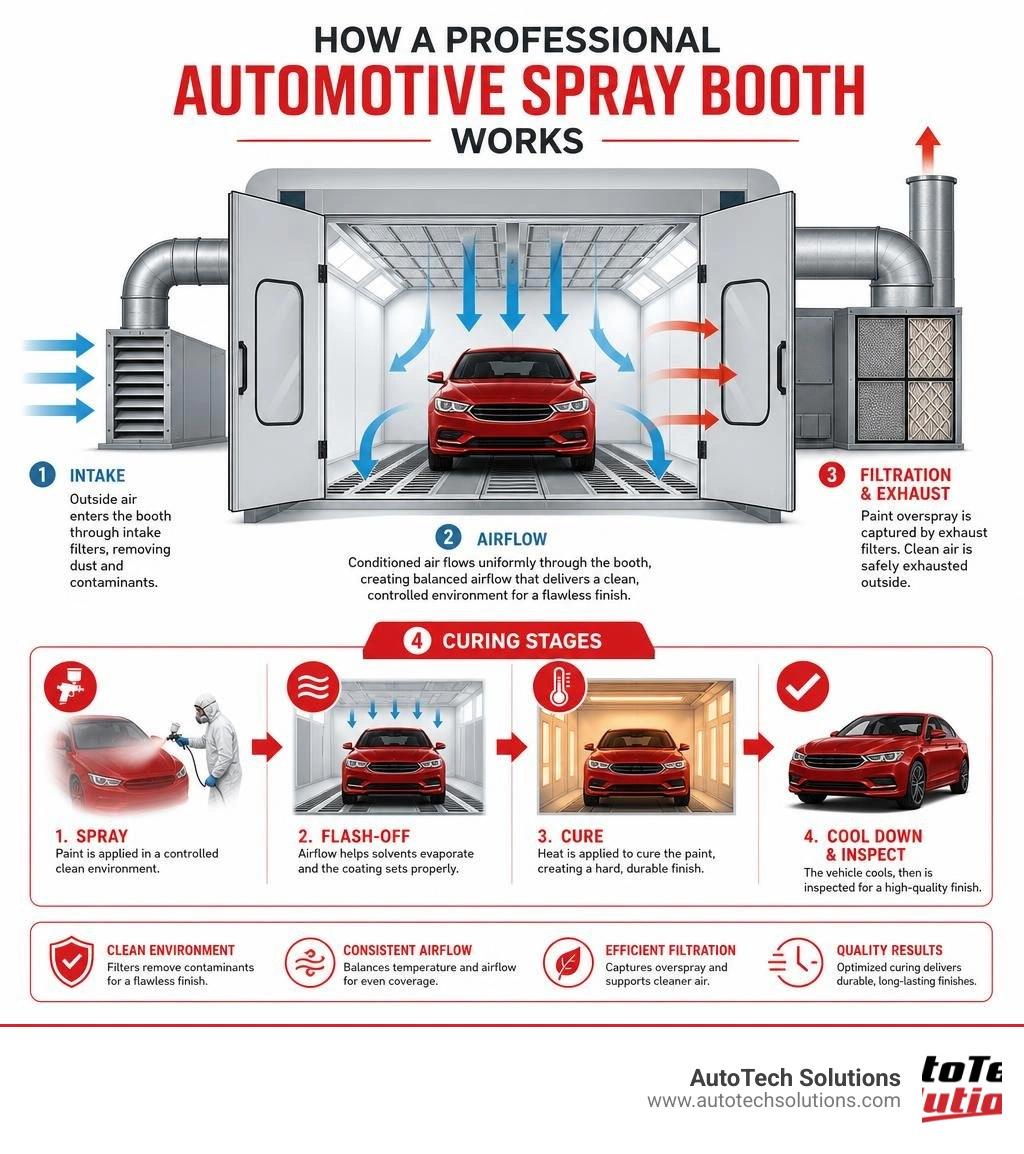
When looking for an Auto Body Paint Booth, you will generally choose between three primary airflow configurations: crossdraft, semi-downdraft, and downdraft.
- Crossdraft Booths: Air enters through filters in the front doors and flows horizontally across the vehicle, exiting through an exhaust bank at the back. While they are the most economical to install, they are more prone to catching airborne dust as the air travels the entire length of the cabin.
- Semi-Downdraft Booths: Air enters through the ceiling at the front of the booth and is pulled back and down toward exhaust filters located at the rear floor. This creates a diagonal draft that offers better contamination control than crossdraft systems.
- Downdraft Booths: Widely considered the gold standard for high-volume collision centers, air enters through a full ceiling filter plenum and is pulled straight down into a floor pit or a raised basement. This configuration immediately pulls overspray and dust downward away from the freshly painted surface, minimizing prep work and buffing.
Selecting the right airflow pattern is a strategic decision. As highlighted by AEI Paint Booths: Custom - Industrial - Automotive, airflow selection must be based on your specific work shape, size, and workflow to effectively control overspray and maintain a clean environment.
Downdraft and Semi-Downdraft Airflow Systems
For commercial collision centers in Michigan, a downdraft setup is often the preferred choice. It offers unmatched contamination control because gravity and airflow work together to pull overspray straight down to the floor exhaust filters. However, installing a pit-style downdraft booth requires cutting concrete, which can add complexity and cost to your project.
If cutting into your shop floor is not feasible—perhaps because you lease your building or have post-tension concrete cables—a raised basement downdraft booth is an excellent alternative. A raised basement adds about 13 inches to the overall height of the booth but eliminates the need for concrete work.
If space or budget constraints make a true downdraft impractical, a semi-downdraft system provides a highly effective compromise. To learn more about the engineering details of these setups, check out our guide on Downdraft Paint Booth Installation.
Sizing and Custom Layouts for Commercial Shops
Commercial shops do not just paint standard passenger cars. In Michigan, fleet operations, municipal services, and commercial transport companies frequently need to paint larger vehicles like Sprinter vans, heavy trucks, and utility machinery.
If you are looking at a Paint Booth for Sale MI, size matters. A standard automotive booth is typically 14 feet wide and 9 feet high. However, if your shop services larger vehicles, you will need to look at oversized options.
For example, specialized truck booths like the Ultra XL Paint Booth feature 12-foot-high ceilings designed specifically for commercial vehicles and full-size pickup trucks. For heavy industrial use, some large truck crossdraft booths can span up to 16 feet wide, 16 feet tall, and 30 feet deep to accommodate the largest commercial vehicles on the road.
Michigan Environmental and Safety Compliance Requirements
Operating a spray booth in Michigan means navigating a strict web of state and federal regulations. The Michigan Department of Environment, Great Lakes, and Energy (EGLE) regulates all spray finishing operations to manage volatile organic compound (VOC) emissions. Additionally, safety standards from OSHA and the National Fire Protection Association (NFPA) must be met to protect your workers and your facility.
Navigating these rules can be daunting, but keeping your shop compliant is critical to avoiding heavy fines and operational shutdowns. For a complete overview of state-specific rules, consult our Paint Booth Experts Michigan Guide.
EGLE Air Quality Permits and Ozone Nonattainment Zones
EGLE requires commercial shops to obtain a Permit to Install (PTI) before setting up a paint booth. However, smaller operations or low-volume shops may qualify for the Rule 287(2)(c) exemption. To qualify for this exemption, your shop must:
- Use less than 200 gallons of coating (including solvents and thinners) per month.
- Equip the booth with a dry filter particulate control system that is properly installed and maintained.
- Keep detailed monthly recordkeeping logs of all coating usage for at least two years.
If your shop exceeds this volume, you must apply for a standard PTI. This is especially critical in Southeast Michigan (including the Detroit-Ann Arbor metro area), which is designated as an EPA ozone nonattainment area. Because of this designation, shops in these counties face enhanced VOC limits and stricter regulatory scrutiny. As of June 2026, EGLE continues to enforce rigorous monitoring to improve regional air quality, making proper permitting and compliance documentation essential for every commercial operator.
NFPA 33, OSHA, and Fire Code Standards for an Automotive Paint Booth in Michigan
Beyond air quality, your booth must meet strict safety codes to prevent fires and chemical exposure. The primary standards governing these installations include:
- NFPA 33: This standard covers spray application using flammable or combustible materials. It regulates the construction of the booth, clearance distances from combustible materials, and ventilation requirements.
- OSHA 1910.107: This federal standard regulates spray finishing operations to protect worker health and safety, focusing on ventilation, electrical wiring in hazardous locations, and proper waste disposal.
- Fire Suppression Systems: Michigan fire codes require all commercial paint booths to have an active fire suppression system (usually dry chemical or wet agent) installed by licensed professionals.
- Electrical Classification: All electrical components, including lights and fan motors inside or near the booth, must be rated for Class I, Division 1 or Class I, Division 2 hazardous locations to prevent sparks from igniting paint vapors.
Working with certified MI Paint Booth Installers ensures your equipment is designed, built, and installed in complete compliance with these local and national safety codes.
Managing Michigan’s Climate Challenges in Spray Finishing
Michigan’s climate is notorious for extreme seasonal swings. From freezing winters with sub-zero temperatures to humid summer days, outdoor conditions can wreak havoc on your paint application and curing cycles. Without the right equipment, cold air entering your booth can prevent paint from flowing smoothly, leading to finishes that run, sag, or fail to cure properly.
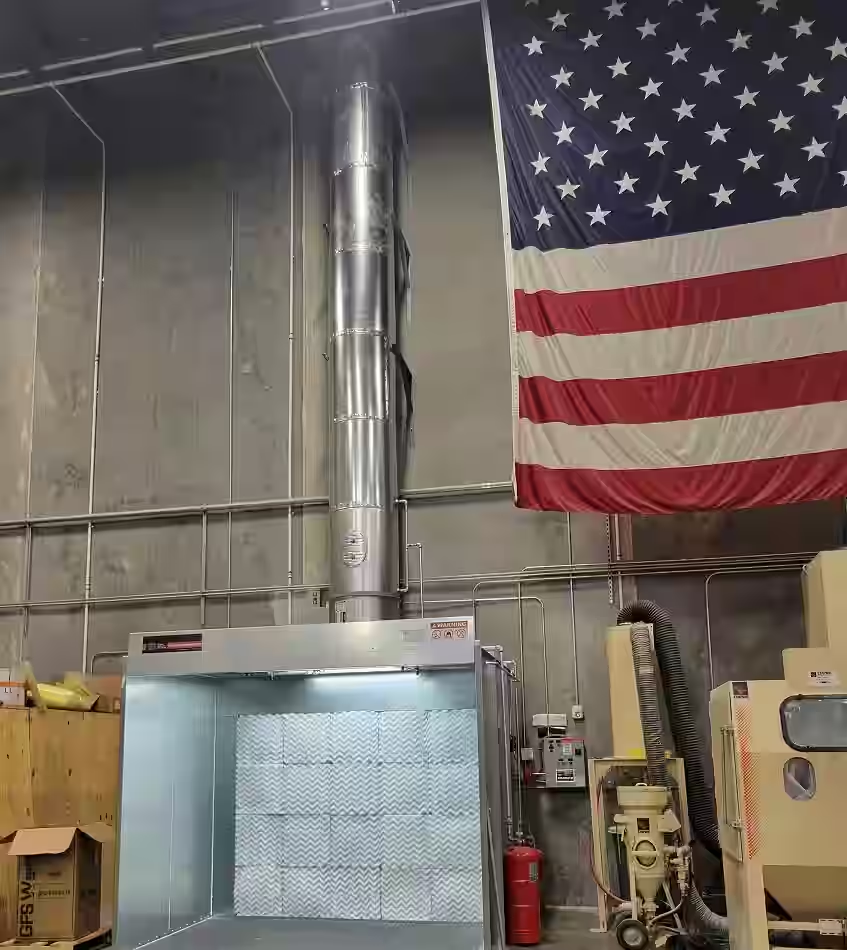
To maintain consistent, high-quality finishes year-round, commercial shops must utilize advanced environmental control systems.
Heating, Curing, and Humidity Control in Cold Weather
When drawing freezing winter air into your shop, you cannot simply spray cold air onto a vehicle. Doing so ruins the paint job and endangers your technicians. This is where an Air Makeup Unit (AMU) is essential. An AMU heats incoming outdoor air to a stable temperature (typically around 70°F for spraying and up to 160°F or more for curing).
For waterborne paints, which are standard in modern collision centers, controlling humidity and airflow is even more critical. Waterborne coatings require rapid air movement to evaporate the water carrier. Integrating a high-performance Waterborne Paint Drying System ensures that your flash times remain fast and consistent, even in the dead of winter. Additionally, utilizing infrared drying technology can dramatically speed up cure times, allowing you to move vehicles through the booth faster without relying solely on gas-heated air.
To keep your coatings at the perfect application temperature before they ever reach the spray gun, we also recommend investing in climate-controlled Paint Mixing Room Equipment.
Energy Efficiency and Fuel Savings with Economy Modes
Heating large volumes of air in the winter is expensive. Fortunately, modern paint booths feature advanced energy-saving technologies.
By utilizing an economy mode, the booth automatically ramps down its fan speeds and burner output when the spray gun is idle. This simple feature can save shops up to 60 percent in electricity and 75 percent in fuel costs.
Furthermore, systems equipped with advanced recirculation modes can recirculate up to 90 percent of the air during the flash and cure cycles. This drastically reduces the energy required to heat fresh outdoor air, keeping your utility bills under control during cold Michigan winters.
Professional Installation, Maintenance, and Repair Services
A paint booth is one of the largest capital investments in your shop. To protect that investment and prevent costly production shutdowns, you need a reliable partner for installation, routine maintenance, and emergency repairs. At AutoTech Solutions, we specialize in providing end-to-end support to keep your finishing operations running smoothly. Beyond spray booths, our expertise extends to complete shop infrastructure setup, including professional car lift installation and heavy-duty equipment integration.
Professional installation is the first step toward long-term reliability. From leveling the cabin panels to wiring the control systems, every detail must be executed precisely. If you want to explore professional options, you can read more about our comprehensive Paint Booth Service.
Minimizing Downtime with Scheduled Preventive Maintenance
The secret to booth longevity is simple: consistency. Neglecting routine maintenance leads to overspray buildup, clogged filters, poor airflow, and eventually, mechanical failure. A solid preventive maintenance program should include:
- Filter Replacements: Intake and exhaust filters must be replaced regularly based on pressure drop readings or operating hours.
- Burner and AMU Service: Annual inspections of your heating system ensure safe and efficient burner operation before winter arrives.
- Airflow and Pressure Testing: Regular testing guarantees that the booth maintains the correct balance of positive or negative pressure.
For a deeper dive into maintaining your equipment, check out our guide on Automotive Paint Booth Maintenance.
Emergency Repair and Rapid Response Times in Metro Detroit
When your paint booth goes down, your entire shop grinds to a halt. You cannot deliver completed vehicles to customers, and your revenue stops. That is why having access to fast, professional repair services is vital.
In the Detroit metro area, reliable service providers typically offer a 24-48 hour response time for scheduled maintenance, with rapid emergency dispatch available for production-down situations. Whether you are dealing with a failed burner motor, a faulty control panel, or broken exhaust fans, our team at AutoTech Solutions is equipped to diagnose and repair the issue quickly. For quick troubleshooting tips you can use before calling in the pros, refer to our Paint Booth Repair Tips Guide.
Financial Considerations: Buying vs. Renting an Automotive Paint Booth in Michigan
Deciding whether to buy a paint booth or seek out a commercial rental is a major financial decision. For high-volume collision centers, owning a booth is almost always the most cost-effective path over the long term. However, for shops handling temporary contract work or specialty fleet projects, renting can provide valuable operational flexibility.
To help you weigh your options, refer to our Paint Booth Installation Cost Guide to understand the total cost of ownership.
| Consideration | Purchasing a Paint Booth | Commercial Booth Rental |
|---|---|---|
| Upfront Cost | High (Equipment + Installation) | Low (Daily or Monthly Fee) |
| Long-Term ROI | High (Asset ownership, lower per-job cost) | Low (Ongoing rental expense) |
| Control | Full control over scheduling and maintenance | Subject to availability and owner's schedule |
| Compliance | Shop owner handles all EGLE/fire permits | Host facility typically handles compliance |
| Flexibility | Permanent installation | Easy to scale back if demand drops |
Cost Analysis of Purchasing a New or Used Auto Body Paint Booth
Purchasing a new, high-quality commercial paint booth typically ranges from $30,000 to over $100,000 depending on the size, airflow, and heating options. While the initial capital expenditure is significant, financing options and equipment leasing can help spread the cost over several years, allowing the booth to pay for itself as it generates revenue.
For shops looking to minimize upfront costs, purchasing a used booth is another option. However, buying used requires careful inspection to ensure the structure, fans, and burners are in good condition and meet modern safety codes. If you are considering this route, read our tips on finding a reliable Used Auto Body Paint Booth for Sale or explore our current inventory of Paint Booth Sales in Michigan.
Commercial Rental Options for an Automotive Paint Booth in Michigan
For some businesses, renting a commercial spray booth is the smarter short-term choice. This is common for shops that have a temporary influx of work, are waiting for a new facility build-out, or only occasionally handle spray-finishing projects.
In the Detroit metro area, some specialized industrial facilities rent out booth space to commercial operators. This allows you to complete high-quality paint jobs without the massive capital expenditure of buying and installing your own system. To learn more about how these arrangements work, read our Paint Booth Rent Complete Guide.
Frequently Asked Questions about Michigan Paint Booths
What are the EGLE Rule 287 permit exemptions for small shops?
The EGLE Rule 287(2)(c) exemption allows low-emitting spray booths to operate without a formal Permit to Install (PTI). To qualify, your shop must use less than 200 gallons of coatings (including solvents, hardeners, and thinners) per month, install and maintain a dry filter system, and keep detailed monthly coating usage records on file for at least two years.
How often should paint booth filters be replaced in high-volume shops?
In high-volume commercial shops, exhaust filters should generally be changed every 50 to 100 operating hours, or when you notice a visible drop in airflow or a rise in booth pressure. Intake filters typically last longer, often requiring replacement every 3 to 6 months. To maintain a clean environment and protect your filters from premature clogging, we also recommend using a professional Spray Gun Cleaning Machine to keep your spray equipment pristine.
What is the typical installation timeline for a commercial downdraft booth?
The entire process usually takes 6 to 12 weeks. This timeline includes the permitting phase (which can take 4 to 8 weeks for local building and EGLE approvals), concrete cutting and curing for downdraft pits (1 to 2 weeks), mechanical assembly of the booth (1 week), and electrical, gas, and fire suppression integration followed by final inspections (1 to 2 weeks).
Conclusion
Investing in an automotive paint booth in Michigan requires balancing performance, energy efficiency, and strict local compliance. From selecting the right downdraft configuration to managing freezing winter temperatures with advanced air makeup units, every choice you make impacts your shop's productivity and profitability.
At AutoTech Solutions, we are dedicated to helping commercial shops succeed. As a trusted one-stop-shop for professional shop equipment, infrastructure, and tools—ranging from paint booths to professional car lift installation and preventive maintenance across Michigan and down to the Carolinas—we focus on minimizing your downtime with expert support and rapid repair response.
Ready to upgrade your shop's finishing capabilities or schedule your next preventive maintenance service? Learn more about AutoTech Solutions collision center solutions and let us keep your business moving forward.