
Why Paint Booth Sales Matter for Your Collision Shop's Bottom Line
If you're evaluating paint booth sales for your automotive, collision, or industrial facility, here's a quick-reference summary of what to look for:
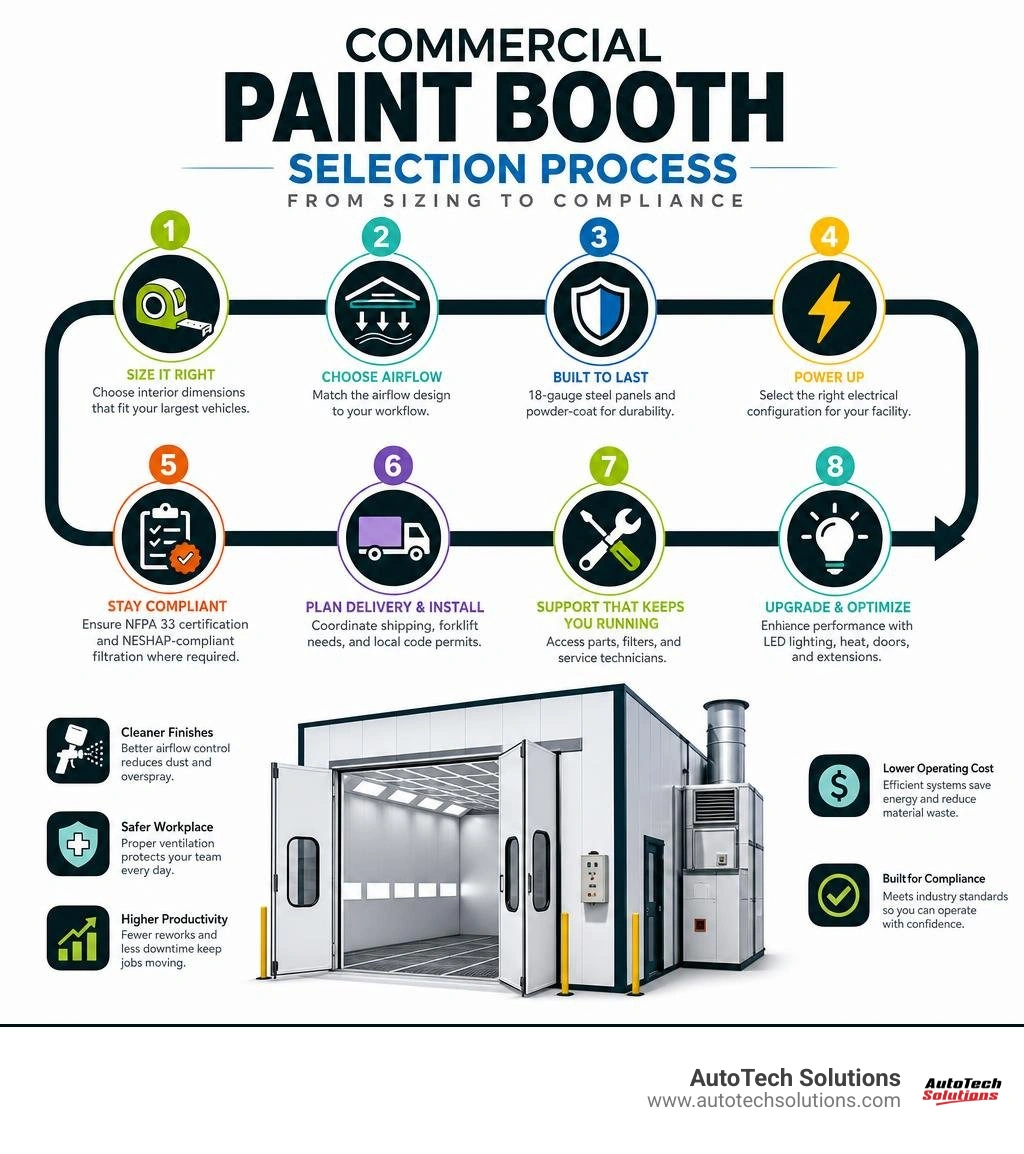
Top factors to evaluate when buying a commercial paint booth:
- Airflow design - Side downdraft, downdraft, or crossdraft configuration matched to your workflow
- Booth size - Interior dimensions that fit your largest vehicles (e.g., 26' or 31' lengths)
- Construction quality - 18-gauge steel panels and powder-coat finish for long-term durability
- Electrical configuration - Single-phase vs. 3-phase motors based on your facility's power supply
- Compliance - NFPA 33 certification and NESHAP-compliant filtration where required
- Shipping and installation - LTL freight logistics, forklift requirements, and local code permits
- Maintenance support - Access to parts, filters, and service technicians in your region
- Accessories and upgrades - LED lighting, heating units, personnel doors, and extension kits
Your paint booth is the single most critical piece of equipment in a collision or refinishing operation. When it goes down, everything stops — and in a high-volume shop, even one unplanned shutdown can cost thousands in lost labor and delayed jobs.
The good news: the right booth, properly sized and maintained, can run reliably for years. One shop owner reported six straight years of continuous operation without unexpected downtime — achieved simply through bi-weekly filter changes and annual booth recoating.
But choosing the wrong booth upfront is an expensive mistake. Airflow design, booth dimensions, electrical requirements, and local compliance rules all affect whether a booth fits your shop's workflow and budget — before you ever spray a single panel.
Here at AutoTech Solutions, our team helps collision centers, fleet shops, and industrial facilities across Michigan and the Carolinas select, install, and maintain professional shop equipment and infrastructure — from commercial paint booths to professional car lift installation — and this guide walks you through exactly what to consider.
Understanding Airflow Designs in Commercial Paint Booth Sales
When searching for the right commercial spray booth, understanding airflow dynamics is your first step. Airflow is not just about keeping the air moving; it is about controlling overspray, protecting your painters, and ensuring a flawless, dust-free finish. In B2B shop equipment, choosing the wrong airflow pattern can lead to endless rework, wasted paint, and unhappy customers.
If you are looking at paint booth sales in michigan or browsing listings for a paint booth for sale mi, you will quickly notice that booths are categorized primarily by how they pull air through the cabin. The three primary styles are crossdraft, semi-downdraft, and downdraft (including side downdraft). Each design handles overspray control differently, directly impacting the cleanliness of your paint department.
The Mechanics of Side Downdraft Systems
A side downdraft paint booth is a highly efficient option that provides many of the benefits of a full downdraft booth without the need for expensive concrete pit excavation. In a side downdraft system, fresh air is introduced into the booth through a filtered ceiling plenum or upper wall plenums. The air is drawn straight down over the vehicle or workpiece, but instead of exiting through a floor pit, it is drawn out through exhaust filters located along the lower side walls of the booth.
This diagonal downward airflow pattern is incredibly effective at pulling overspray away from the vehicle's surface, preventing dry spray and minimizing finish defects. For example, a standard commercial Side Downdraft Paint Booth 26x14 uses two UL-Listed Dayton 24-inch tube-axial fans powered by 3 HP motors to pull a massive 14,000 CFM of airflow at 0.5 static pressure. This high volume of movement ensures a rapid air exchange rate, maintaining a safe and clean working environment.
Selecting this configuration can also simplify your facility prep. Because it does not require a concrete pit, a downdraft paint booth installation of the side-exhaust variety can save your shop thousands of dollars in concrete cutting and floor preparation costs.
Comparing Downdraft, Semi-Downdraft, and Crossdraft Configurations
To help you decide which airflow design fits your shop's needs and budget, let's break down how these configurations stack up against each other:
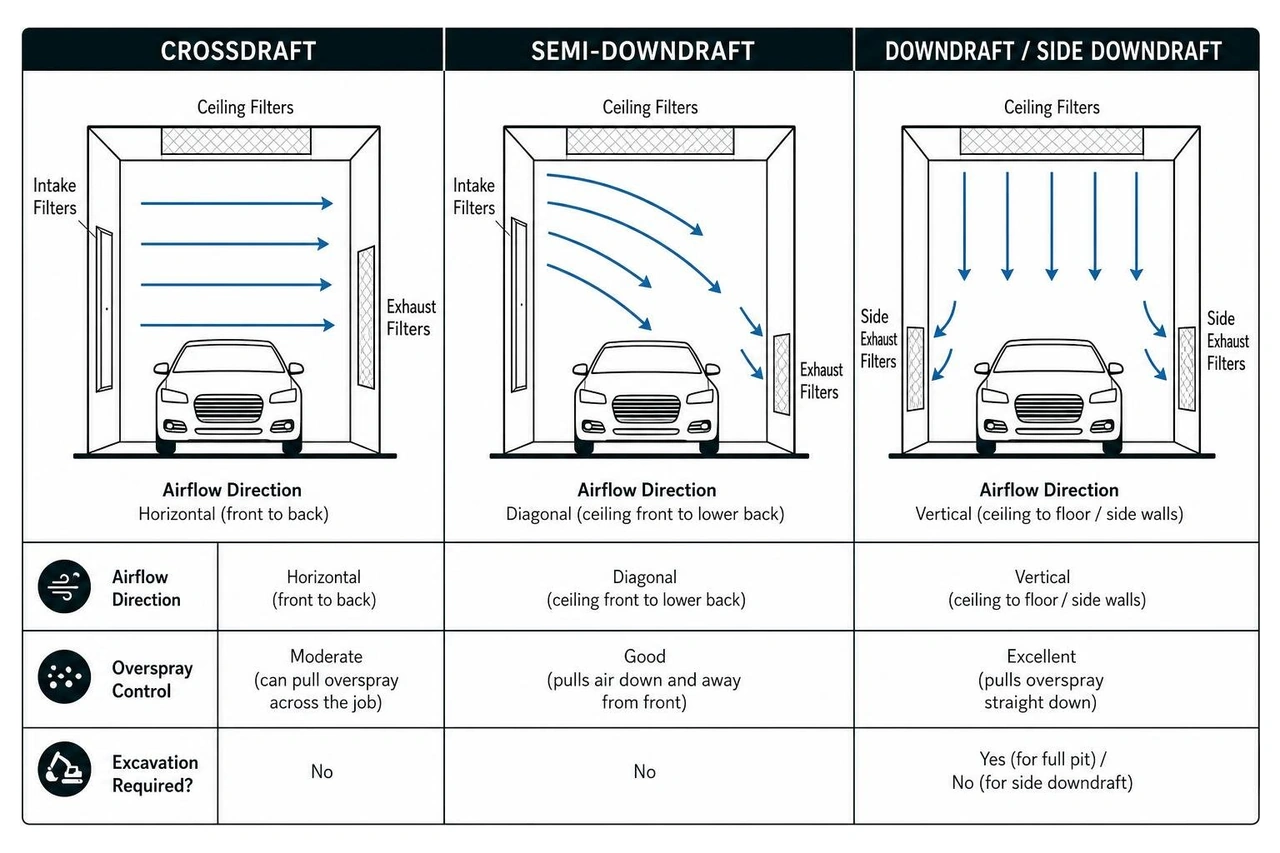
| Feature | Crossdraft | Semi-Downdraft | Full Downdraft / Side Downdraft |
|---|---|---|---|
| Airflow Direction | Horizontal (front to back) | Diagonal (ceiling front to lower back) | Vertical (ceiling to floor / side walls) |
| Overspray Control | Moderate (can pull overspray across the job) | Good (pulls air down and away from front) | Excellent (pulls overspray straight down) |
| Excavation Required? | No | No | Yes (for full pit) / No (for side downdraft) |
| Initial Cost | Lowest | Moderate | Higher |
| Finish Quality | Good | Very Good | Outstanding (industry gold standard) |
While crossdraft booths have the lowest initial cost, they carry significant limitations for high-volume collision centers. Because air flows horizontally across the vehicle, overspray from the front of the vehicle can settle on panels painted at the rear.
For a busy auto body paint booth or a large-scale industrial paint booth, a semi-downdraft or side downdraft configuration is almost always the superior operational choice. They strike the perfect balance between high-quality finishes and manageable installation costs.
Key Specifications and Sizing for High-Volume Shops
When investing in a commercial booth, looking beyond the price tag to evaluate the technical specifications is essential. The right build materials, electrical configurations, and physical dimensions will dictate your daily operating costs, heating efficiency, and overall throughput.
If you are currently looking at options like a used auto body paint booth for sale or researching our paint booth rent complete guide, keep in mind that a booth is a long-term asset. Cutting corners on build quality now can cost you dearly in energy bills and structural repairs down the road.
Construction Quality and Electrical Configurations in Paint Booth Sales
A premium paint booth must be built to withstand the daily rigors of a commercial shop environment. Look for booths constructed from precision-punched, 18-gauge galvanized steel panels. To ensure maximum durability and light reflectivity, these panels should be finished with a high-quality powder coating. This robust construction prevents panel deflection under high static pressure, blocks rust, and makes the interior walls incredibly easy to clean and maintain.
Another critical decision during your facility buildout equipment planning is choosing between single-phase and 3-phase electrical configurations.
- Single-Phase Power (230V): Often found in smaller shops. While functional, single-phase motors draw more current and can experience more electrical stress during continuous operation.
- 3-Phase Power (230V/460V): The preferred option for commercial facilities. 3-phase electrical configurations provide highly stable, efficient motor operation for heavy-duty, continuous production use.
Using high-quality components, such as UL-listed Dayton tube-axial fans, ensures that your ventilation system runs reliably day in and day out without overheating or losing static pressure.
Sizing and Productivity Features
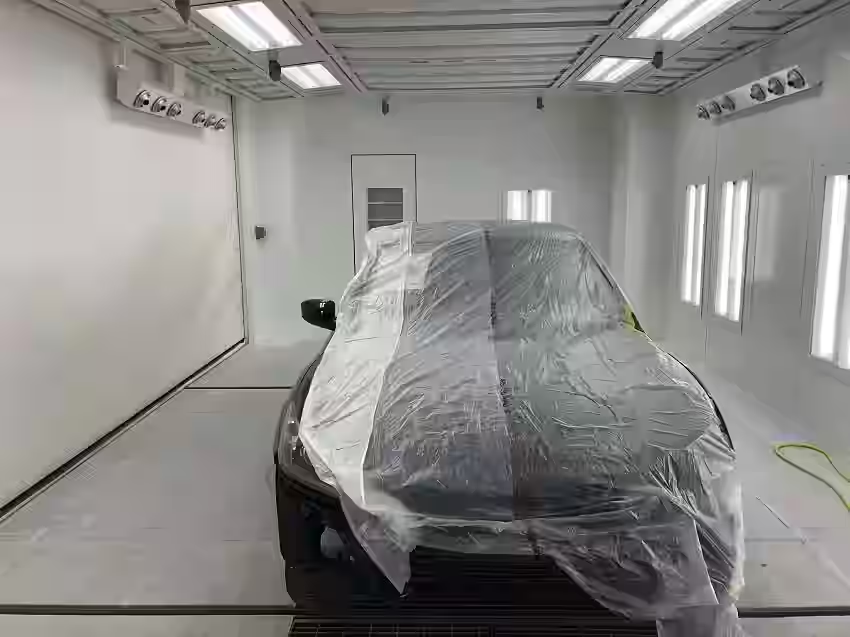
In a busy collision center, time is money. Upgrading to a larger booth size can dramatically increase your paint department's productivity. For instance, while a standard 26-foot booth is excellent for painting single vehicles, upgrading to a 31-foot booth allows technicians to paint both the vehicle and its individual parts simultaneously. This simple workflow adjustment eliminates the need for separate parts-painting cycles, boosting throughput and maximizing your daily profitability.
Additionally, look for productivity-enhancing features like:
- Fast Temperature Rise & Heating: Advanced gas-fired burners allow for rapid heating, reducing cure times and getting vehicles out of the booth faster.
- Accele-cure Airflow: This system accelerates the evaporation of water or solvent from the painted surface, which is critical if you are utilizing a modern waterborne paint drying system.
- Integrated Support Rooms: Pairing your booth with professional paint mixing room equipment keeps your mixing environment clean, safe, and located directly adjacent to the spraying area for maximum efficiency.
Shipping, Installation, and Compliance Requirements
Purchasing a paint booth is only half the battle; getting it delivered, installed, and certified is where the real work begins. Because of the size and weight of commercial paint booths, buyers must plan their logistics carefully to avoid costly delays or delivery rejections.
Before your booth even ships, you must prepare your shop floor. To help you budget for the entire process, consult our paint booth installation cost guide and our detailed collision center equipment install guide.
Navigating LTL Delivery and NFPA 33 Compliance in Paint Booth Sales
Most commercial paint booths are shipped via Less-Than-Truckload (LTL) carriers on 48-foot semi-trucks. It is important to know that standard LTL liftgates cannot handle the weight and length of a complete paint booth package.
Therefore, you must have a forklift or skid steer on-site and ready to unload the truck when it arrives. If you do not have unloading equipment, you will need to coordinate with the freight carrier to arrange for a terminal pickup at their nearest local warehouse.
Beyond the physical delivery, safety and regulatory compliance are paramount. Any commercial paint booth you purchase must comply with NFPA 33 (the standard for spray application using flammable or combustible materials). This compliance ensures your system features proper fire suppression placement, explosion-proof lighting, and correct electrical grounding.
Additionally, depending on your location and industry, you may need NESHAP-compliant filtration systems to capture hazardous air pollutants. Working with certified mi paint booth installers or consulting a paint booth experts michigan guide can save you months of permitting headaches with local environmental and building authorities.
Maximizing Longevity Through Preventative Maintenance and Service
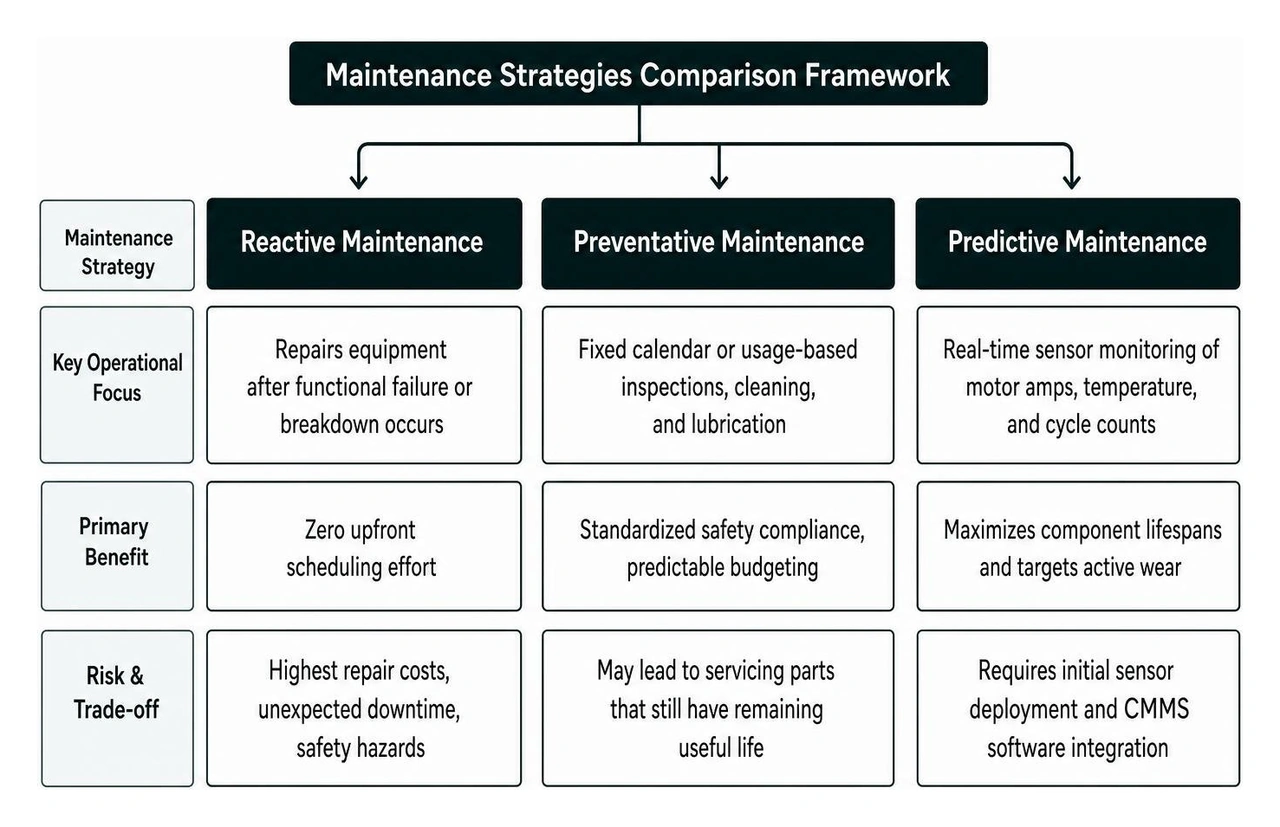
Even the highest-quality paint booth will suffer in performance if it is not properly maintained. Regular maintenance is the absolute key to preventing unexpected downtime, keeping your finish quality spotless, and ensuring a safe working environment for your painters.
At AutoTech Solutions, we cannot stress enough how a proactive approach to maintenance saves money. If you want to dive deeper into repair strategies, bookmark our paint booth service and paint booth repair tips guide to keep your crew prepared.
Standard Maintenance Requirements to Prevent Booth Downtime
To keep your paint booth running at peak performance, establish a strict routine maintenance schedule. Performing these tasks during off-hours (such as Friday afternoons or weekends) ensures your shop's workflow remains uninterrupted.
- Bi-Weekly Filter Changes: Intake and exhaust filters must be replaced regularly. Clogged filters restrict airflow, increase static pressure, strain your exhaust fan motors, and allow dust to settle on your fresh paint jobs.
- Annual Booth Recoating: Applying a peelable booth coating to the interior cabin walls once a year protects the white powder-coated steel from overspray buildup and maintains maximum light reflectivity inside the booth.
- Deep Cleaning and Prep Deck Maintenance: Routinely pressure washing and deep cleaning your prep deck prevents dirt from being tracked into the main spraying chamber.
- Exhaust Fan Lubrication & Burner Tuning: Keep fan bearings lubricated and have a certified technician tune your gas burners annually to ensure clean, energy-efficient heating.
To support your maintenance efforts, make sure your shop is equipped with high-quality spray gun cleaning machine units and that you keep a steady stock of auto body paint shop supplies, such as premium filters and wall coatings, on hand. For a comprehensive checklist, check out our guides on automotive paint booth maintenance and collision center equipment maintenance.
Conclusion
Investing in a commercial paint booth is a major step toward scaling your B2B automotive or industrial refinishing business. By carefully evaluating airflow designs, planning for electrical and delivery requirements, and committing to a routine preventative maintenance program, you can eliminate unexpected downtime and keep your paint department operating at maximum profitability.
At AutoTech Solutions, we are dedicated to keeping your shop running smoothly. From professional car lift installation and paint booth setup to rapid-response repair and preventative maintenance services across Michigan and the Carolinas, we are your trusted partner in professional shop equipment and infrastructure.
Ready to take your paint department to the next level? Explore our comprehensive AutoTech Solutions Collision Center Solutions or contact our team today to find the perfect paint booth setup for your business.