What Does a Vehicle Lift Actually Cost in 2026?
Understanding vehicle lift price is the first step to making a smart equipment investment for your shop. Costs vary widely — from around $2,000 for a basic 2-post lift to well over $20,000 for heavy-duty or specialty configurations — and that's before accounting for installation, electrical work, and concrete prep.
Here's a quick breakdown of what commercial shops typically pay in 2026:
| Lift Type | Typical Capacity Range | Starting Price |
|---|---|---|
| 2-Post Lift | 9,000 – 15,000 lbs | $2,200 – $7,400+ |
| 4-Post Lift | 8,000 – 40,000 lbs | $3,150 – $22,000+ |
| Scissor / Alignment Lift | 8,000 – 12,000 lbs | $3,000 – $10,000+ |
| Mobile Column Lift | 60,000 – 72,000 lbs | $15,000 – $40,000+ |
These are equipment-only prices. Add $500–$2,000+ for professional installation, up to $1,200 for concrete work, and $200–$900 for electrical upgrades.
So why do so many shop owners end up paying more than they expected? Because the sticker price is only part of the story.
A lift that looks like a bargain at $2,500 can quickly cost your operation far more — in failed inspections, technician downtime, liability exposure, or premature equipment failure. ALI certification status, structural steel quality, hydraulic system design, and brand warranty all drive real differences in long-term cost and reliability.
This guide from AutoTech Solutions breaks down every layer of commercial vehicle lift pricing — from lift type and capacity to installation, infrastructure requirements, and ongoing maintenance — so your next equipment decision protects your bottom line.

Simple vehicle lift price glossary:
Understanding the Commercial Vehicle Lift Price by Lift Type
When you are planning a commercial workshop layout, choosing the right lift type is critical. The design of the lift directly dictates its structural demands, engineering complexity, and raw material requirements. Consequently, the vehicle lift price varies dramatically from one configuration to another.

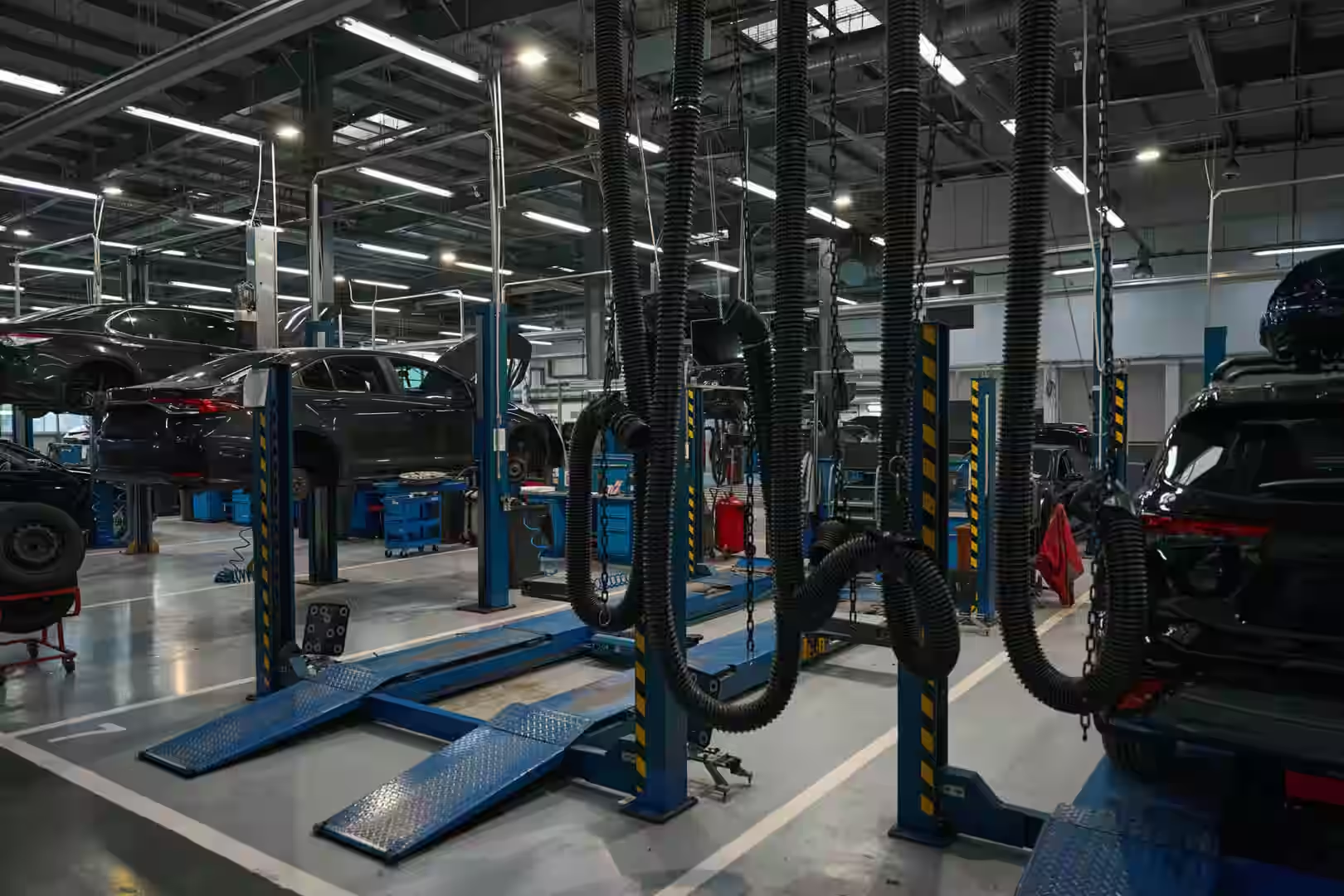
Commercial shops rely on several core lift designs to keep their service bays moving:
- 2-Post Lifts: The undisputed workhorse of the modern service bay. Offering exceptional under-vehicle access, these lifts are ideal for suspension tuning, brake service, and drivetrain repairs. Commercial-grade 10,000-lb. capacity two-post lifts start at $3,695.00, while heavy-duty 11,000-lb. capacity models begin around $4,549.99.
- 4-Post Lifts: Primarily utilized for wheel alignments, quick-lube services, and heavy truck maintenance. They provide drive-on convenience and superior stability. A entry-level 12,000-lb. capacity four-post lift starts at approximately $4,200.00, whereas heavy-duty 40,000-lb. capacity fleet lifts can easily exceed $22,000.00.
- Scissor Lifts: These lifts are perfect for shops with limited space or low ceiling clearances. They collapse flat into the floor or sit low to the ground. Mid-rise and full-rise commercial scissor lifts generally range from $3,000 to $10,000 depending on weight capacity and whether they are flush-mounted.
- Mobile Column Lifts: Designed for heavy-duty transit, municipal, and fleet maintenance shops servicing buses, dump trucks, or semi-tractors. Because they are highly mobile and operate in synchronized sets of four to eight columns, prices start around $15,000 and can scale to over $40,000.
- Alignment Lifts: These are specialized 4-post or scissor lifts equipped with integrated slip plates and turnplates. Because of the precision engineering required to maintain a perfectly level runway for accurate wheel alignments, these lifts typically command a premium, ranging from $6,000 to $15,000.
For a deeper dive into selecting the optimal system for your bay, read our Ultimate Automotive Lifts Guide 2026.
Factors Influencing the 2-Post Vehicle Lift Price
If you are looking to install a two-post lift, the specific configuration of the columns and lifting arms plays a massive role in the final invoice.
- Symmetric vs. Asymmetric Arms: Symmetric lifts point the columns directly facing each other and share the load equally in the center. Asymmetric lifts angle the columns slightly backward and feature unequal arm lengths, allowing technicians to open vehicle doors wider while positioned on the lift. Asymmetric engineering adds slightly to the price but significantly boosts shop efficiency.
- Clear Floor (Overhead) vs. Floor Plate (Baseplate) Design: Clear floor lifts route the hydraulic lines and equalization cables overhead, leaving the floor completely free of obstructions. This allows transmission jacks and oil drains to roll smoothly under the vehicle. Floor plate models run these lines along the floor under a metal cover. While floor plate models are cheaper and work well in low-ceiling shops, clear floor lifts are the industry standard for high-productivity commercial bays.
Capacity also scales the price. A standard 10,000-lb capacity two-post lift can be found for $3,695.00, while a premium model with advanced arm configurations can list for $5,398.00. If your shop services heavy duty work trucks or commercial vans, upgrading to a 12,000-lb capacity or a 15,000-lb capacity model will push equipment costs between $4,700 and $6,300+. For shops operating with restricted overhead space, exploring a 2 Post Floor Plate Car Lift is a viable path, while heavy-duty demands might lead you to premium commercial-grade direct-drive models with multi-stage arms.
Heavy-Duty and 4-Post Vehicle Lift Price Drivers
When purchasing a 4-post lift, the equipment cost is heavily driven by the physical dimensions of the runways and the accessories required to perform professional service.
- Runway Length and Width: Longer wheelbases (such as those on dual-rear-wheel work trucks or commercial vans) require extended runways. Adding length and width requires more structural steel, which directly increases the manufacturing and shipping costs. For example, standard 9,000-lb capacity four-post lifts start around $6,295.00, while extended-runway models carry a clear premium.
- Alignment Turnplates: If the 4-post lift is destined for an alignment bay, it must feature built-in recess pockets for turnplates and rear slip plates. This specialized construction adds to the initial equipment price.
- Rolling Bridge Jacks: To perform wheel, brake, or suspension work on a 4-post lift, you must raise the vehicle's wheels off the runways. This requires pneumatic-hydraulic rolling bridge jacks that slide between the runways. Adding a pair of these jacks can easily add $3,000 to $6,000 to your total package.
If your fleet or commercial shop handles heavy municipal equipment, school buses, or class 8 trucks, you will need to invest in a dedicated 4 Post Truck Lift for Sale with capacities ranging from 14,000 lbs to 40,000 lbs.
Key Cost Drivers: Capacity, Certification, and Brand Reputation
Why does one 10,000-lb two-post lift cost $3,500 while another seemingly identical model costs $7,500? The answer lies beneath the surface in steel quality, safety engineering, and certification.
- ALI Certification: The Automotive Lift Institute (ALI) is the safety watchdog of the vehicle lift industry. Lifts that carry the ALI Gold Certification label have undergone rigorous independent testing to prove they meet ANSI/ALI ALCTV safety standards. Commercial shop operators can learn more about lift safety and certification directly from the Automotive Lift Institute. This certification is not just a badge of honor; it is frequently required by local building inspectors, OSHA compliance officers, and commercial liability insurance policies. Non-certified lifts are cheaper, but they expose your business to massive liability risks and potential closure.
- Structural Steel Quality: Premium brands utilize high-tensile, commercial-grade steel and robust structural designs, such as 7/8-inch structural forklift mast channel construction. Cheaper lifts often use thinner gauge steel that can flex under load, leading to accelerated wear on internal carriage sliders and hydraulic seals.
- Commercial-Grade Hydraulics: High-end lifts feature heavy-duty cylinders, single-point mechanical lock release systems, and premium power units designed to handle dozens of cycles a day without overheating. Lower-tier lifts use cheaper utility motors and hydraulic seals that are prone to premature failure in high-volume commercial environments.
- Warranty and Support: A long structural and functional parts warranty, such as a 5-year structural / 1-year labor warranty, protects your investment. Premium brands maintain extensive replacement parts networks, ensuring that if a cable or seal fails, your bay is not out of commission for weeks waiting on overseas shipping.
Before making a purchasing decision, consult our Car Lift 2 Post Buyers Guide 2026 to weigh these critical factors.
The True Cost of Ownership: Installation, Infrastructure, and Maintenance
The purchase price of the lift is only the first line item on your budget. To successfully integrate a new lift into your commercial bay, you must account for the physical infrastructure required to support it.
- Concrete Slab Specifications: Your shop floor must be structurally capable of supporting the immense localized weight of a loaded lift. For most commercial 2-post lifts up to 12,000 lbs, you need a minimum of a 4-inch to 6-inch concrete slab rated at 3,500 PSI or higher. If your existing concrete is too thin, cracked, or unreinforced, you will need to pay a contractor to cut out the old slab, dig down, and pour new concrete footings. This site prep can add $1,200 or more per bay.
- Electrical Requirements: Commercial lifts do not run on standard 110V wall outlets. They typically require dedicated 208-230V single-phase or three-phase electrical connections on 20A or 30A breakers. Hiring a commercial electrician to run conduit, pull wire, and install disconnects typically costs between $200 and $900 per lift.
- Compressed Air Lines: Many heavy-duty 4-post lifts and rolling bridge jacks utilize pneumatic safety releases or air-powered hydraulic pumps. If your bay does not already have compressed air drops nearby, you will need to factor in the cost of plumbing air lines to the lift.
To ensure your shop meets all structural and mechanical requirements, we highly recommend scheduling a professional Car Lift Installation Service.
Local labor and logistics also vary by region. For instance, if you are setting up a facility in the Carolinas or the Midwest, shipping costs, local permitting, and structural anchoring standards will depend heavily on your regional geology and municipal building codes. Working with an equipment partner that has local physical branches in these regions ensures compliance with local regulations and reduces freight costs.
Professional Installation vs. In-House Installation Risks in Commercial Shops
In a commercial business environment, cutting corners on lift installation is a recipe for disaster. While attempting an in-house installation might seem like a way to save on upfront costs, the commercial risks far outweigh the savings.
- Liability and Insurance: If a lift fails and damages a customer’s vehicle or injures an employee, your commercial liability insurance provider will launch an immediate investigation. If they discover the lift was not installed by a certified professional in accordance with manufacturer specifications and local building codes, they may deny your claim entirely.
- Safety Compliance: Professional installers ensure the lift columns are perfectly plumb, equalized, and anchored using certified concrete fasteners. They use professional rotary hammer drills and torque wrenches to set anchors to exact depth and torque specifications, preventing column pull-out under heavy loads.
- Warranty Protection: Many premium lift manufacturers will void your warranty if the equipment is not installed and signed off by an authorized, certified installer.
For a comprehensive guide on what to expect during the installation process, check out our Car Lift Installers Complete Guide.
Preventative Maintenance and Repair Costs
Once your lift is installed and operating, protecting your investment requires a commitment to routine maintenance. Neglecting your lifts leads to accelerated wear, safety hazards, and costly bay downtime.
- Annual Safety Inspections: OSHA and ANSI standards require commercial shops to have their vehicle lifts inspected annually by an ALI Certified Lift Inspector. These inspections typically cost around $125 to $250 per lift and are essential for maintaining safety compliance and business insurance coverage.
- Hydraulic Fluid Replacements: Hydraulic fluid should be checked regularly and replaced every few years to prevent contamination and seal wear. This basic preventative maintenance typically costs under $50 per year in materials but saves thousands in cylinder repairs.
- Cable and Chain Tensioning: Over time, the steel equalization cables on 2-post and 4-post lifts will stretch. Regular adjustments and tensioning are required to ensure both carriages rise in perfect synchronization. Cables typically require complete replacement every 5 to 7 years at a cost of approximately $150 to $300.
Partnering with a dedicated service provider for scheduled Car Lift Maintenance is the most effective way to protect your technicians and prevent unexpected operational halts. If you do run into operational issues, you can troubleshoot using our Auto Lift Repair Guide 2026, read about Common Causes of Automotive Lift Downtime, or coordinate specialized repairs via our guides on Two Post Lift Repair and After Hours Automotive Lift Repair.
Frequently Asked Questions About Commercial Vehicle Lift Costs
What is the average price of an ALI-certified 2-post lift?
In 2026, a commercial-grade, ALI-certified 2-post lift with a 10,000-lb capacity typically costs between $3,600 and $5,500 for the equipment alone. Heavy-duty 12,000-lb to 15,000-lb certified models generally range from $4,700 to $7,500+. While non-certified lifts can be found for less, the certified models use superior steel, carry robust manufacturer warranties, and ensure full compliance with OSHA and insurance standards.
How much does professional installation add to the total cost?
Professional mechanical installation for a standard 2-post or 4-post lift in a commercial shop typically adds $500 to $2,000+ to the project cost. This price covers the labor of setting the columns, plumbing the hydraulic lines, running the equalization cables, and anchoring the lift to the concrete. This fee does not usually include electrical hookups or extensive concrete work, which should be quoted separately by licensed trade contractors.
What concrete specifications are required for heavy-duty lifts?
Most commercial 2-post and 4-post lifts up to 12,000 lbs require a concrete floor that is a minimum of 4 inches thick (ideally 6 inches for heavier capacities) rated at 3,500 PSI or greater. The concrete must be fully cured (typically a minimum of 28 days after pouring) before the lift can be anchored and loaded. Installing a lift on cracked, uneven, or thin concrete can lead to structural failure and column tip-over.
Conclusion: Maximizing ROI on Your Shop's Lift Investment
Investing in a commercial vehicle lift is a major decision that shapes your shop's daily output, technician safety, and long-term profitability. While it is tempting to focus solely on the initial vehicle lift price, the smartest operators look at the total cost of ownership — balancing equipment durability, certified safety standards, professional installation, and reliable service support.
At AutoTech Solutions, we are committed to helping commercial automotive, fleet, and collision shops maximize their uptime and protect their bottom line. As a true one-stop-shop for automotive equipment sales, professional installation, preventative maintenance, and rapid repair service, we serve commercial operations across Michigan and the Carolinas from our dedicated physical locations:
- Novi, MI
- Charlotte, NC
- Raleigh, NC
- Wade, NC
By choosing a trusted partner to handle your equipment needs, you eliminate the risk of structural anchoring failures, electrical code violations, and expensive operational downtime. Let us help you select, install, and maintain the perfect lifting systems for your service bays.
To get started on upgrading your commercial workshop with expert precision, schedule a professional consultation today via our Automotive Lift Installation portal.