How a Frame Straightening Machine Fits Into Collision Repair
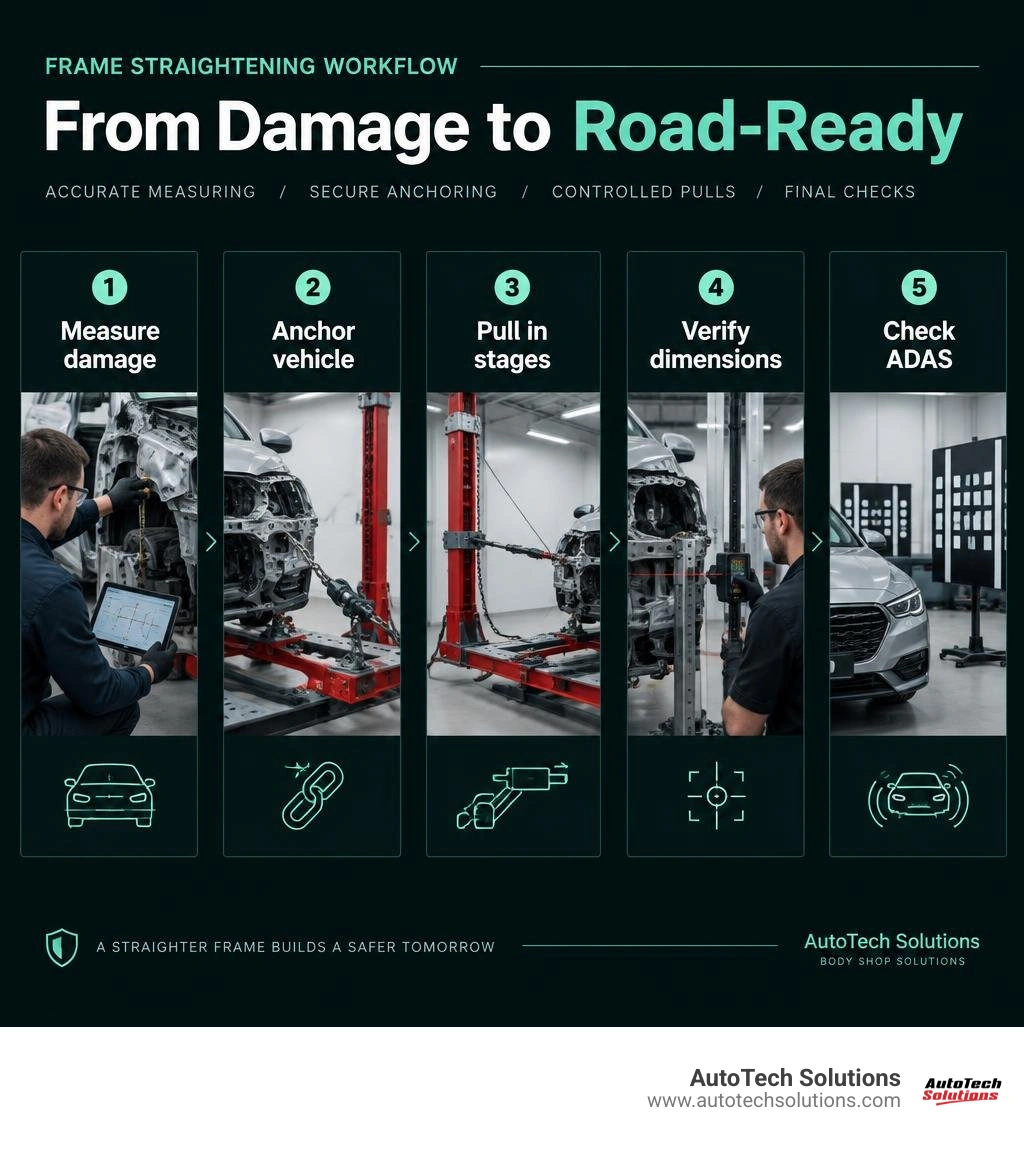
A frame straightening machine holds a damaged vehicle steady while hydraulic towers apply controlled force to its structure. In commercial facilities, technicians measure structural deviation against OEM specifications, anchor the chassis securely, make staged multi-angle pulls, and re-verify dimensions. Effective collision repair demands adherence to manufacturer repair procedures, reliable automotive frame repair protocols, and routine automotive equipment repair to keep hydraulics operating within spec.
For a professional body shop, integrating precision pulling racks with other heavy duty shop equipment avoids costly rework and establishes the true datum baseline required for downstream ADAS recalibration. We are AutoTech Solutions Staff, and this guide explains how commercial shops can configure and operate industrial frame machines for maximum structural accuracy.
Essential Components of a Frame Straightening Machine
Operating a commercial frame machine starts with understanding its primary mechanical and hydraulic assemblies. Modern collision facilities rely on robust platforms to withstand multi-ton vector forces without flexing. When evaluating an auto body shop frame machine, the core build quality dictates whether a shop achieves millimeter-level precision or loses valuable labor hours fighting structural deflection.
The essential components of any industrial frame straightening bench include:
- Structural Steel Bed: Heavy-duty treadway decks or tubular steel frames provide a rigid datum baseline. Commercial platforms range from 18 to 22 feet in length to support extended-wheelbase passenger trucks and commercial fleet vehicles.
- Hydraulic Pulling Towers: Upright steel posts deliver controlled linear tension via internal hydraulic rams. Premium units provide 360-degree rotation around the entire perimeter of the bed, allowing pulling from any angle without unanchoring the chassis.
- Universal Anchoring Systems: Heavy clamp assemblies, specialized down-pull attachments, and rigid pinch-weld blocks lock the unibody or full frame to the platform, transferring tensile forces directly into the damaged metal rather than shifting the vehicle.
- Hydraulic Power Units and Vector Controls: High-pressure hydraulic pumps (pneumatic-over-hydraulic foot treadles or electric-hydraulic consoles) supply consistent fluid pressure to cylinders rated between 6 and 10 tons per tower, yielding 20 tons or more of cumulative pulling power on twin-tower assemblies.
- Electronic and Mechanical Measuring Systems: Integrated 3D ultrasound, laser, or mechanical coordinate jigs continuously track control points against original OEM chassis geometry.
Mastering vehicle frame straightening requires matching the hydraulic capability of the bench to the metallurgical resistance of modern high-strength steels.
Structural Differences: Unibody vs Body-on-Frame Repair
Repairing structural collisions requires distinct clamping, pulling, and anchoring strategies depending on whether the vehicle utilizes unibody construction or a separate ladder-style chassis.
Unibody platforms integrate the floor pan, pillars, apron assemblies, and quarter panels into a single load-bearing structure. Unibody repairs rely on four-point pinch-weld anchoring along the rocker panels. Because collision energy disperses throughout the entire monocoque structure during an impact, technicians must pull multiple structural zones simultaneously. Applying equalized, distributed tension ensures torque boxes, strut towers, and subframe mounts return to factory specifications without tearing thin-gauge advanced high-strength steels (AHSS).
Body-on-frame platforms—standard in full-size pickup trucks, commercial vans, and heavy-duty chassis—isolate structural loads within rigid perimeter or ladder rails. Straightening these frames requires dedicated holding stands, chain lock-downs around heavy crossmembers, and higher tensile tonnage. Instead of pinch welds, holding fixtures attach directly to the heavy-gauge boxed rails. Adhering to professional structural alignment standards ensures that dimensional tolerances along the datum line, center section, and frame horns remain true. Our automotive frame repair complete guide explores advanced metallurgy in greater depth.
Rack Configurations for Diverse Commercial Facility Layouts
Commercial shop square footage is a premium asset. Selecting the correct rack configuration directly influences bay cycle times, facility workflow, and technician movement:
- Scissor-Lift Frame Benches: These units feature a narrow footprint and integrated hydraulic scissor mechanisms that lower flush to the floor or raise to ergonomic working heights. They serve as multi-functional bays for cosmetic pull jobs, structural measuring, and reassembly.
- Tilt-Deck Platform Racks: Utilizing drive-on ramps and hydraulic tilting beds, these heavy-duty platforms speed up vehicle loading. Wide treadways provide a stable walking surface for technicians positioning anchoring fixtures.
- Clear-Floor Platform Systems: High-end platform racks feature cantilevered or elevated pulling tracks that allow towers to roll completely around the vehicle perimeter without ground-level hoses or base channels blocking tool carts and technicians.
Proper bay planning is crucial when expanding shop capacity. Reviewing facility buildout equipment planning helps body shop owners designate sufficient clearance around tower swing radiuses.
Step-by-Step Operational Workflow for Structural Repairs
A standardized operational workflow prevents structural over-pulling and ensures repeatable accuracy across technician shifts. Integrating a computer-controlled collision repair alignment system transforms raw pulling power into a refined structural realignment process.
Step-by-Step Setup of a Frame Straightening Machine
Setting up a vehicle on the alignment platform must be methodical. Precision at the mounting stage prevents misreadings during pulling:
Technicians must verify that all four anchoring stands are torqued down evenly and cross-checked against reference planes using modern auto collision repair tools. Uneven clamping causes false datum readings that compromise the finished repair.
Controlled Multi-Angle Hydraulic Pulling Techniques
Once anchored, structural realignment follows the principle of reversing collision vectors:
- Calculate the Reverse Vector Angle: Position the pulling tower directly in line with the impact's trajectory. If an impact buckled an apron inward and downward, the pull must exert force outward and upward.
- Rig Safety Cables and Chain Locks: Wrap commercial-grade pulling chains around structural frame horns using certified grab hooks. Never allow chains to twist. Always string a safety safety cable through the chain links to catch hardware if a clamp slips.
- Apply Incremental Hydraulic Pressure: Pressurize the 10-ton hydraulic ram slowly using a foot pump or electronic control valve. Stop at designated pressure increments to allow the metal's internal grain structure to normalize.
- Relieve Structural Stress (Cold Working): Use body hammers and backing dollies to dress localized buckles and stress risers while the frame rail remains under steady hydraulic tension. Relieving the built-up tension prevents the rail from springing back when the hydraulic load is released.
- Verify Real-Time 3D Coordinates: Observe live digital readouts on the measuring console. Once dimensions enter OEM tolerance bands (typically within +/- 1 to 2 millimeters), slowly bleed off hydraulic cylinder pressure and recheck static dimensions.
Following our collision center equipment install guide guarantees that hydraulic fluid loops and high-pressure fittings remain safe and leak-free under daily heavy shop duty.
ADAS Alignment and Sensor Recalibration Prerequisites

Modern vehicles rely on Advanced Driver Assistance Systems (ADAS) that utilize forward-facing radar, lane-departure cameras, blind-spot radar sensors, and LiDAR units. A frame straightening machine plays an indispensable role in ADAS accuracy: sensor brackets are mounted directly to structural subframes, radiator supports, and rear body panels.
If a commercial shop attempts electronic sensor calibration on a vehicle with a twisted chassis, the sensors cannot achieve their correct orientation. Maintaining proper ADAS calibration equipment maintenance alongside certified precision frame repair methods prevents calibration failures and liability risks.
Structural Accuracy Requirements for Camera and Radar Systems
Forward radar units mounted behind front grilles project narrow radar beams down the road. If front frame horns remain deflected by just 3 millimeters, that angular displacement projects outward, causing the vehicle's automatic emergency braking system to track adjacent lanes rather than traffic directly ahead.
Before performing electronic ADAS setup using the steps outlined in our ADAS equipment installation complete guide, collision facilities must confirm:
- Frame datum points match factory vertical, lateral, and longitudinal dimensions.
- The vehicle thrust line aligns parallel to its geometric centerline.
- Subframe cradle mounting holes are square and level.
Commercial Equipment Selection, Investment Costs, and Maintenance
Choosing the right structural frame machine requires balancing pulling capacity, floor space, equipment build quality, and expected return on investment.
Routine equipment servicing keeps structural racks operating safely under maximum hydraulic pressure. Consult our preventative maintenance service guide and collision center equipment maintenance procedures to safeguard shop productivity.
Key Specifications: Tonnage, Bed Length, and Tower Capacity
When comparing equipment spec sheets, shop owners should evaluate five critical engineering metrics:
- Tower Pulling Tonnage: Standard passenger vehicles and light trucks require at least 10 tons of hydraulic pulling force per tower. Commercial truck bays demand multi-tower configurations capable of 20+ tons of synchronized pulling power.
- Platform Length and Width: A 20-foot bed accommodates full-size crew-cab trucks and extended commercial vans. Benches measuring 18 feet or shorter are best suited for compact and mid-size passenger vehicles.
- Tower Swing Degrees and Pin Flexibility: Verify whether the pulling towers rotate a full 360 degrees around the platform. Multi-hole locking pin systems allow towers to lock securely into exact vector angles.
- Hydraulic Line Durability: High-pressure hydraulic circuits must utilize double-braided steel wire hoses with anti-abrasion jacketing to prevent catastrophic hydraulic blowouts under high tensile loads.
- Bed Lift Rating: Verify whether the internal scissor or tilt-deck hydraulic rams can raise vehicle weights of 7,700 to 10,000 pounds to ergonomic technician working heights.
Investing in heavy-duty heavy duty shop equipment ensures your facility handles fleet trucks without exceeding machine capacity.
How Much Does a Commercial Frame Straightening Machine Cost in 2026?
As of 2026, entry-level pulling benches start near $9,995, while mid-range 18-to-20-foot platform frame machines with twin 10-ton towers average between $17,000 and $24,000. Top-tier, heavy-duty commercial truck frame straighteners and OEM-certified universal jig benches range from $45,000 to over $70,000 depending on electronic measuring software packages and included specialty clamp boards.
When budgeting for structural equipment, shops should evaluate the total cost of ownership, including delivery, professional hydraulic installation, technician training, and annual measuring software database subscriptions. Explore our automotive equipment sales guide 2026 for comprehensive financing and equipment package details.
Frequently Asked Questions About Collision Frame Alignment
How do modern frame machines reverse collision damage without metal fatigue?
Modern frame machines preserve metal strength by utilizing multi-point vector pulling combined with incremental hydraulic pressure. Rather than applying sudden, high-stress jerks, the equipment applies slow, controlled tension that allows the metal's crystalline structure to shift back toward its stamped state. Technicians relieve residual internal stress by tapping localized buckles with body hammers while the rail is held under tension, eliminating spring-back without thinning or tearing the steel.
Why must structural alignment be completed before performing wheel alignment?
Wheel alignment angles—including camber, caster, toe, and steering axis inclination—depend entirely on suspension mounting points located on the subframe, engine cradle, and unibody apron assemblies. If the vehicle's structural frame remains twisted or swung out of alignment, technicians will exhaust the mechanical adjustment range on tie rods and control arm cams without achieving factory wheel alignment specs. Correcting the frame datum line first guarantees that suspension mounting geometry sits squarely on the chassis centerline.
What routine maintenance is required for commercial hydraulic frame towers?
Routine maintenance for commercial frame machines includes:
- Weekly Hydraulic Inspection: Checking hydraulic ram wiper seals, quick-disconnect couplers, and double-braided hoses for fluid seepage, blistering, or wear.
- Monthly Chain and Hardware Inspection: Inspecting pulling chain links for stretching, elongation, micro-cracks, and gouges. Discard any chain assembly showing link distortion.
- Platform and Tower Lubrication: Cleaning and lubricating tower base rollers, swivel pins, and platform guide channels with heavy grease to ensure smooth rotation.
- Hydraulic Fluid Flushes: Changing pump reservoir hydraulic oil annually to purge moisture and prevent internal valve corrosion.
Conclusion
A frame straightening machine is the structural backbone of any high-performing body shop. Achieving precise structural alignment protects your repair quality, maintains vehicle crashworthiness, and ensures downstream ADAS calibration systems function reliably on the road.
At AutoTech Solutions, we help body shops and commercial collision centers across Michigan and the Carolinas maximize productivity and minimize downtime. From complete shop layout planning and precision equipment installation to preventative maintenance programs and prompt emergency service, our expert field teams keep your bays moving at full speed.
Explore our comprehensive catalog of commercial collision repair products or contact our technical team today to upgrade your collision repair infrastructure.